Supply Chain Disruption at California Ports After COVID-19
A collaborative case study examining congestion at two California ports and its downstream effects on logistics, consumers, and the U.S. economy.
Archived writing sample. Originally published by Utah State University MBA coursework on June 25, 2024. Imported from the author’s WordPress archive for review.
Authors - Tracie Fillerup, Ramez Halteh, Patrick Rich, Rebecca Wheelwright
Introduction
The day after Thanksgiving, 2021 in Harris County, Texas. A 19-year old is hoping to make a little extra money selling something on his local classifieds. A Playstation 5 - one of the hottest items to get this christmas and not just because it’s the latest and greatest in graphic technology. Very quickly the whole affair turns as the “buyer” pulls a gun on the teen and attempts to rob him. The teen is shot in the scuffle, and the thief escapes while the playstation sits in the mud.^([1]) The Playstation, like so many electronics this year, is in short supply due to a shortage of critical chips. The chip shortage is affecting every sector from gaming to home goods and the scarcity of products is having a serious impact on consumers. Thankfully, the teen in this story isn’t injured critically and is expected to fully recover.
Part of this problem is simply that manufacturers can’t supply enough chips to meet demand for the various industries. Another problem in this story may simply be that the chips exist, but they or other necessary parts are stuck in a dock somewhere, waiting for a ship, a container or a truck. As disruptions like the chip shortage ripple through the supply chain, the shipping terminals have been struggling to adapt, with compounding inventory, demand, labor and other problems that have created a logjam that is impacting almost every facet of everyday life. Most of the disruptions won’t result in being shot, for example, most of us are feeling the effect of this log jam and there doesn’t seem to be a clear end in sight.
Background
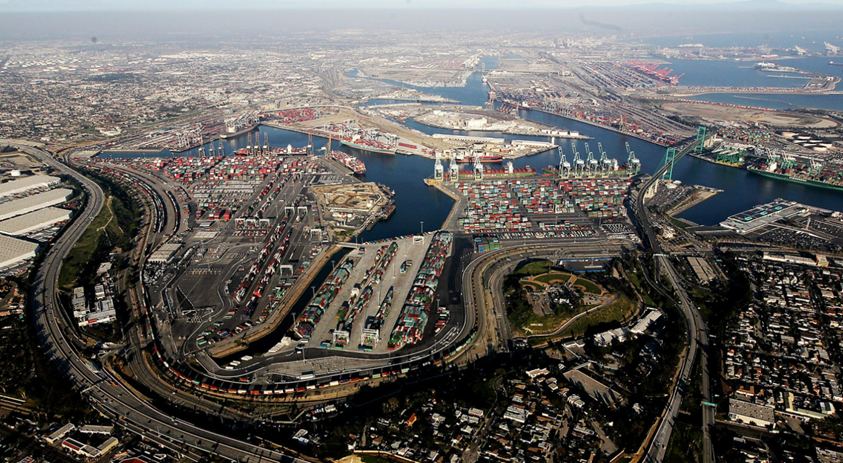
The Ports of Los Angeles and Long Beach have historically been some of the busiest in the US. Around 40% of all freight, from playstations to garden gnomes, comes through these two ports.
On a normal day, giant cargo ships enter the ports and tie up to one of many berths where an intricate orchestration of cranes, guided by software unload as many as 25,000 20-foot container units ashore. Once on the dock, other cranes load containers onto chassis which allow them to be moved by truck, called drayage, to distribution centers or their final destinations. Trucks line up at the port entrance, then line up to pick up a chassis, and line up once more to leave to deliver their cargo across town or across country. Rail also accounts for much of the freight and works in much the same way. The current system to organize this movement, “Port Optimizer”, has been in place for the past 10 years. In 2018 the Ports of Los Angeles and Long Beach (LA-LB) partnered with GE Transportation Port Optimizer to collaborate on a more robust data driven option to provide visibility of containers through the Supply chain system. Unfortunately, not enough data was available as of October 2019 to implement the system. At that time, Brian Hill, GE Transportation senior product manager, said: “We’re not there yet.” He also mentioned that “European ports were the first developers of port information portals, but US ports and terminal operators have chosen not to adopt the European model.”^([2])
US Ports of Los Angeles and Long Beach California^([3])
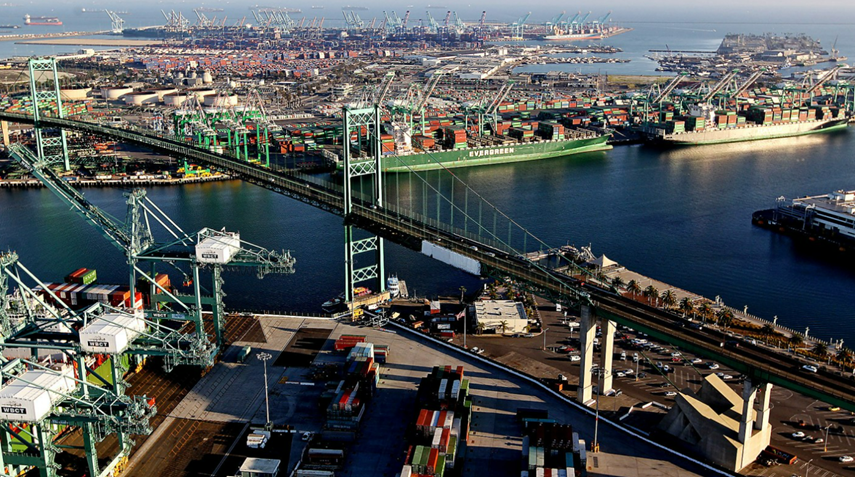
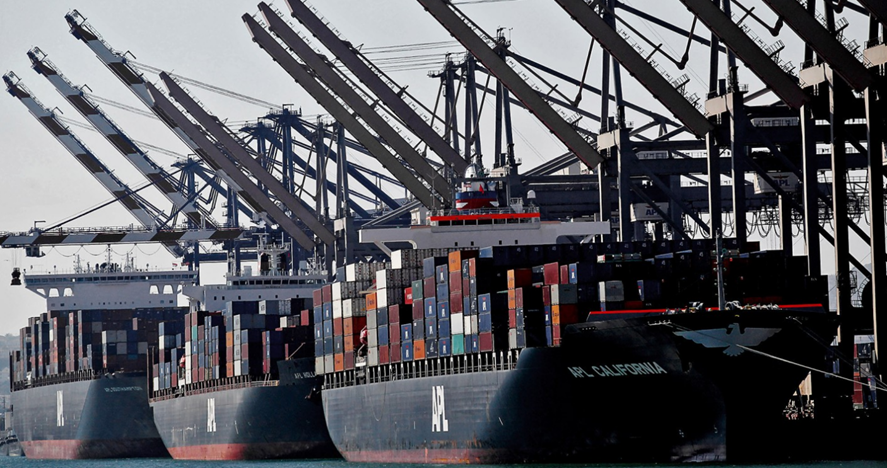
Normally when a ship is unloaded with cargo it may take on empty containers to take back across the ocean to be used again in the logistics chain.
Without large-scale disruptions, the input to the ports and the outputs from the ports are largely balanced and inventory buildup in the form of containers or ships waiting for transport doesn’t accumulate. Pre-pandemic timelines for containers to “dwell” on the dock were under 4 days for local delivery and 2 days for delivery by rail.
Current state
At the start of the COVID-19 pandemic in the fall of 2019, demand for products was heavily curtailed, and consumerism was rapidly halted by government restriction keeping people in their homes and preventing them from traveling. Manufacturers of all types of goods responded to this shift in buying by reducing manufacturing output and canceling or delaying orders in their ordinarily rhythmic supply chain.
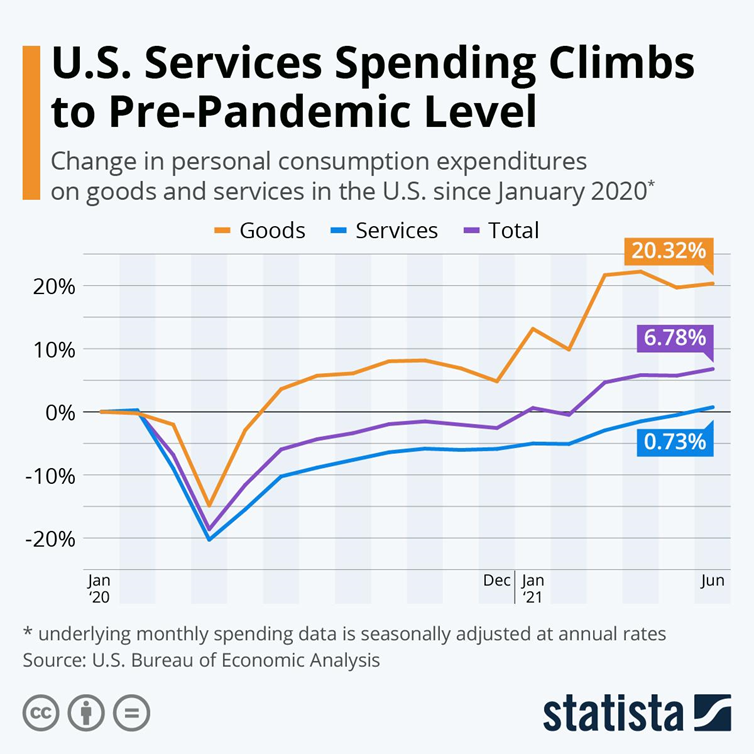
After a short slump, consumer spending surged dramatically and unexpectedly as people shifted their spending from services to goods. The size and speed of the rebound was largely unanticipated and manufacturers who had cut production were suddenly faced with unexpected demand and no capacity. (see exhibit)
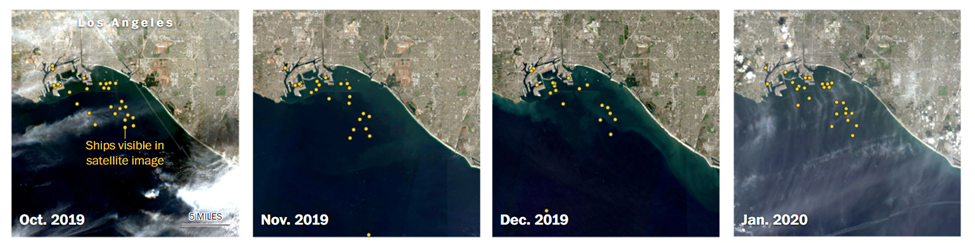
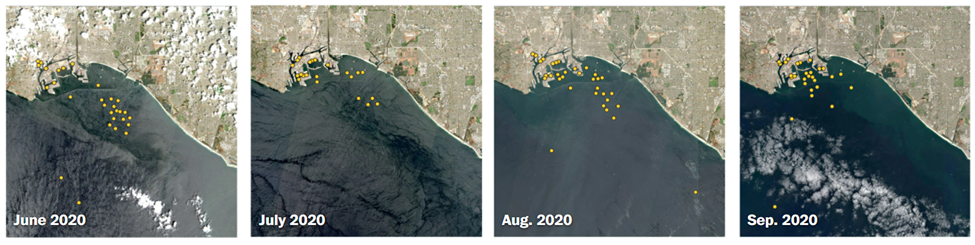
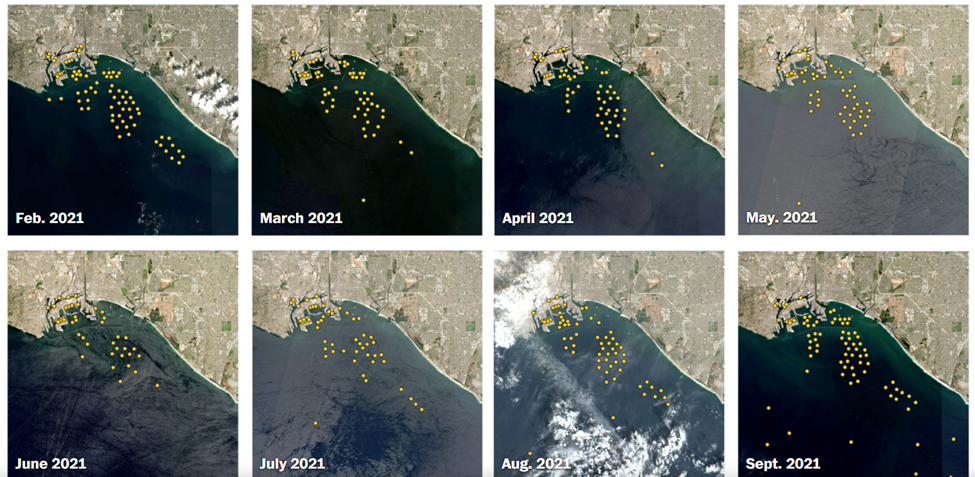
As of December 2021, the ports of Los Angeles and Long Beach are currently the bottleneck of the US Supply chain and as such have increased the cost of shipping by 10-fold. Containers that used to dwell on the dock for 2-4 days are there for 9 or more days and ships are now waiting at anchorage up to several weeks at a time (see exhibit). Unfortunately, it is not the only bottleneck in the system.
During a November, 11, 2021 60 Minutes story^([4]), “What caused America’s Supply Chain Crunch?”port infrastructure limitations were outlined. These issues include, 1) No continuity between city owned ports, 2) Antiquated scheduling processes and 3) Limited space to store empty containers.
First, because each port is owned by the city in which it resides without federal oversight or accountability, this has created a lack of continuity of service and resource pooling challenges.
Although the Biden-Harris Supply Chain Disruptions Task Force has been monitoring the current situation, they have no authority to impose changes on a broad scale. Both California ports are experiencing a build up of containers being offloaded from ocean carriers without a clear direction of where they go next.
Second, the new scheduling process from GE was never implemented and the current system is not working as it should. The system requires truckers who pick up and drop off containers to make an appointment in advance. The challenge that this creates is that sometimes they are not there on time or that they wait all day to be told that the yard is too full of a certain color container and they are turned away. Matt Schrapp of the Harbor Trucking Association said that the limited space at the ports to return empty containers and the scheduling system are “gumming up the process”. When asked if it is a labor shortage as the terminals suggest, he denied that this is an issue on their end and suggests that “The issue is too much coming in through the US Supply chain and not enough is leaving fast enough.” ^([5])
Third, limited storage capacity and labor shortages have exacerbated ground freight issues along roads, highways, and rail yards. The largest contributor to moving the containers seems to be the space to keep them and the chassis they sit on. The streets of Los Angeles and Long Beach are overwhelmed with the number of containers in the city around the ports and the limited space to keep them.
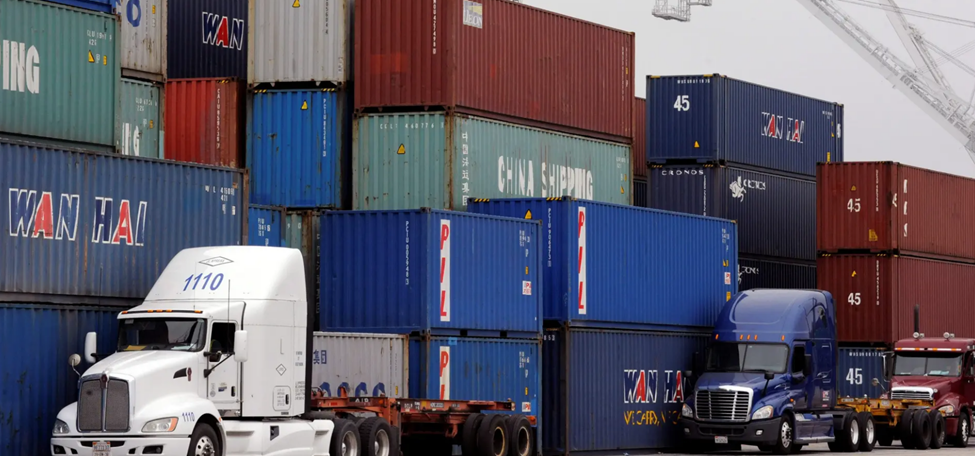
Containers stacked in Long Beach Streets^([6])
Truckers are limited on the number of containers they can move at one time. Smaller trucking companies have expressed the concern about finding quality labor and resources to manage the infrastructure constraints with scheduling and returning containers. When they wait all day to return a container and then are turned away, they cannot recoup those costs to increase wages and maintain a suitable labor force to meet demands. Ryan Johnson, a veteran trucker who wrote an article in “Medium” shared why may of his counterparts are no longer on the job:
“Many of those licensed drivers are no longer behind the wheel because they can find better working conditions and pay elsewhere. Jobs in factories, construction sites, and warehouses pay similar wages, and don’t require people to work 70-hour weeks, sleep in parking lots, or wait in line for hours without pay or bathroom breaks to pick up a container at an overwhelmed port.”^([7])
The Whitehouse and Biden-Harris Administration has been working to make broader changes to the US Supply Chain by allocating funds to support infrastructure updates, however the $17 Billion dollars that has been allocated to improve the ports may not be enough to compete with ports in Singapore or Hong Kong. The lack of storage space at the ports, railroad depots and other storage facilities is compounding the problem further by increasing the holding costs and downstream cost of products to the consumer. If we remember that “an hour saved at the bottleneck is an hour saved for the entire system,” we can get a better grasp on what we are really facing. ^([8])
Ryan Petersen, CEO of the freight forwarding company Flexport says “terminals are simply overflowing with containers, which means they no longer have space to take in new containers either from ships or land. It’s a true traffic jam.”^([9])
Shipping companies charge per TEU (Twenty-foot Equivalent Units) and rates have historically been between around $3000 per TEU.^([10]) A ship that is waiting for the dock to clear has to sit idle at anchorage, costing the shipping company directly in the form of wasted labor, fuel, storage fees, etc., as well as removing that ship from being able to handle more runs and more containers. The resultant scarcity of shipping space and increased direct costs have increased the cost of a TEU to as high as $20,000 or more.
A recent White House Paper dated June 21, 2021 shared that, “The situation has been especially difficult for businesses with complex supply chains, as their production is vulnerable to disruption due to shortages of inputs from other businesses.” It also reported that some businesses have been unable to hire fast enough to keep up with the rising need for workers, leading to 8.3 million job openings in April 2021. ^([11])
The bottleneck at the ports has many companies that had been practicing lean manufacturing and just in time inventory, re-evaluating their supply chain and inventory practices. Just in time inventory allows companies to “adapt to changing market demands, while cutting costs.” ^([12]) In addition to freeing up real estate, whether on store or warehouse shelves, to allow retailers to carry a larger variety of products.
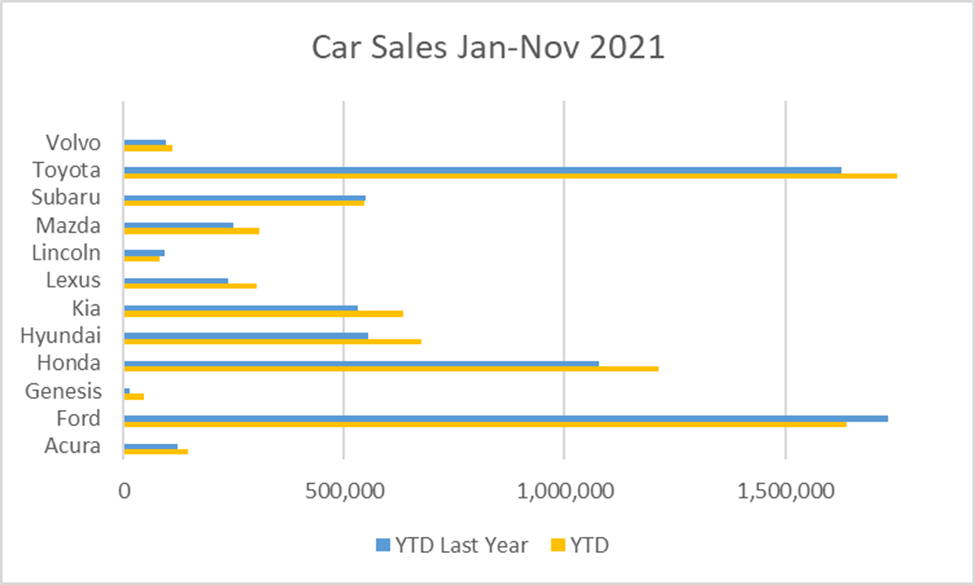
“Dealership inventory is roughly a third of what it was pre-pandemic, according to research from J.D. Power and LMC Automotive. The average time for a new vehicle to sit on a dealer lot before being sold is an estimated 26 days — the first time on record below 30 days. Two years ago — pre-pandemic — it was 62 days.” ^([13]) “When the pandemic began, car manufacturers slashed orders for chips on the expectation that demand for cars would plunge. By the time they realized that demand was reviving, it was too late: Ramping up production of computer chips requires months.” In September 2019, pre-pandemic, retail customers bought 1,020,000 new vehicles, out of 2.9 million vehicles in inventory (roughly 35%). With automotives being in short supply auto dealers have doubled their gross profit per vehicle. Some auto dealers are hoping to continue to maintain a leaner inventory of cars, just not as lean as it has been recently. ^([14]) (See also exhibits)
Though some dealers are enjoying the perks of having a more lean inventory, auto makers are suffering from the supply chain shortage with emphasis on the chip shortage. “One example of the magnitude of this shift is Toyota, which pioneered the concept of just-in-time manufacturing. The pandemic prompted Toyota to scale back this overarching business mandate to accommodate risks made abundantly clear by the pandemic. Please realize that Toyota has an amazing network of partners. Many of those partners include joint ownership, family ties, and decades long agreements. If Toyota says just-in-time, lean manufacturing, and sole sourcing isn’t working, I believe them!” ^([15])
Moving forward
The ports of Long Beach and Los Angeles and their affiliated partners have an inventory buildup problem that is getting worse. Bottleneck constraints, a lack of resource pooling with one another, a surge in consumer demand and increased demand from companies scrambling to rebuild safety stocks and anticipate future demand and other factors have pushed a normally highly utilized resource past its ability to keep up with the demand placed on it.
Some efforts are being made to mitigate the problem and are showing results. For example, the city manager of Long Beach relaxed several of the city zoning laws to allow stacking of containers up to 5 tall for 90 days.
In addition, the Ports of Long Beach and Los Angeles will begin charging Shipping companies $100 per container that is not moved within 9 days of docking for trucking and 6 days for containers moved by rail.^(^([16]))
Under the temporary policy approved Oct. 29 by the Harbor Commissions of both ports, ocean carriers can be charged for each import container that falls into one of two categories: In the case of containers scheduled to move by truck, ocean carriers could be charged for every container dwelling nine days or more. For containers moving by rail, ocean carriers could be charged if a container has dwelled for six days or more.
The ports plan to charge ocean carriers in these two categories $100 per container, increasing in $100 increments per container per day until the container leaves the terminal. This impact fee will go into effect on 12/6/21. In a current post on the Port of Long Beach website, it had this statement:
“Since the fee was announced on Oct. 25, the twin ports have seen a decline of 37% combined in aging cargo on the docks. The executive directors of both ports will reassess fee implementation after another week of monitoring data.
With the goal of increasing throughput, reducing inventory and bringing lead times and costs down, there have been several suggested paths forward.
- Improved technology across the entire supply chain continuum by utilizing AI to better predict, manage and operate systems across the supply chain. European ports have adopted this strategy and have been overall less affected than the two large California ports.
- Retailers taking more control over shipping modes. Amazon has been buying its own containers and chartering smaller vessels and airplanes since 2017 to ship its goods and avoid the busiest ports.^([17])
- Manufacturers reprioritizing their manufacturing for specific customers. For instance chip makers are supplying chips to car makers and Apple before sending them to general electronics
- Many manufacturers are bringing their supplies closer to home. Ford is planning to move some chip production in house, for example.
- High shipping fees themselves are helping adjust the flow of goods. Higher freight costs scarcely impact the overall cost of electronics, which can be packed tightly together. They do however impact large consumer items like lawn chairs which take up a great deal of space and contain lower margins.
The supply chain failures at the ports are endemic of a far more complicated issue than just management at these choke points and illustrate the effect that each part of the value chain has, from manufacturer to consumer. Solving these problems long term will require looking for innovative ways to solve localized issues such as the port’s flow management problems as well as re-evaluating lean practices and globalized production.
The consequences of supply chain disruptions are far reaching, from delayed and lost business, aggravating shopping experiences and even in the case of the teenager shot for trying to sell their Playstation, risks to your very life. The constraints placed on the global supply chain should be a wakeup call for all parts of distribution and manufacturing on how they can build reliance, redundancy and flexibility into their efforts.
Exhibits
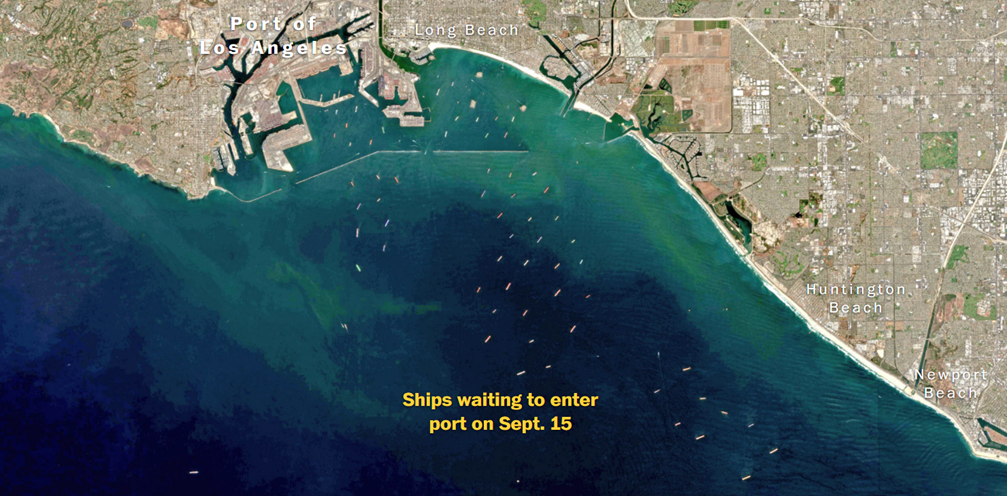
European Satellite – Sentinel pictures – taken the middle of each month^([19]) This photo was from September 15, 2021.
[1] https://www.newsobserver.com/news/nation-world/national/article256231617.html#:~:text=A%2019%2Dyear%2Dold%20teen,news%20outlets%20and%20authorities%20said.&text=The%20man%20then%20walked%20out,a%20gun%2C%20the%20statement%20said.
[2] https://www.joc.com/port-news/us-ports/port-los-angeles/data-gaps-prevent-full-benefits-la-lb-port-optimizer_20191030.html
[3] https://www.latimes.com/la-fi-port-container-ships-pg-photogallery.html
[4] https://youtu.be/W7jSsyQKIfE
[5] https://youtu.be/W7jSsyQKIfE
[6] https://qz.com/2079345/cargo-ships-containers-are-piling-up-in-long-beach/
[7] https://jalopnik.com/greed-is-why-the-supply-chain-crisis-isnt-ending-veter-1848068966
[8] Goldratt, Eliyahu M., 1947-2011. The Goal : a Process of Ongoing Improvement. Great Barrington, MA :North River Press, 2004.
[9] https://qz.com/2079345/cargo-ships-containers-are-piling-up-in-long-beach/
[10] https://www.cnbc.com/2021/08/05/china-us-container-shipping-rates-sail-past-20000-to-a-record.html
[11] https://www.whitehouse.gov/cea/written-materials/2021/06/17/why-the-pandemic-has-disrupted-supply-chains/
[12] https://www.nytimes.com/2021/06/01/business/coronavirus-global-shortages.html
[13] https://www.cnbc.com/2021/09/03/discounts-on-new-cars-are-hard-to-come-by-how-to-find-a-good-deal.html
[14] https://www.forbes.com/sites/jimhenry/2021/09/28/computer-chip-shortage-hurts-september-auto-sales-drives-many-shoppers-to-the-sidelines/?sh=6bcce2165387
[15] https://harbert.auburn.edu/news/supply-chain-post-covid.html
[16] https://polb.com/port-info/news-and-press/container-dwell-fee-remains-on-hold-until-dec-6-11-29-2021/
[17] https://www.cnbc.com/2021/12/04/how-amazon-beats-supply-chain-chaos-with-ships-and-long-haul-planes.html
[18] https://www.statista.com/chart/23574/consumer-spending-on-goods-and-services/
[19] https://www.washingtonpost.com/business/2021/09/17/port-los-angeles-satellite/
[20] https://www.goodcarbadcar.net/2021-us-vehicle-sales-figures-by-brand/